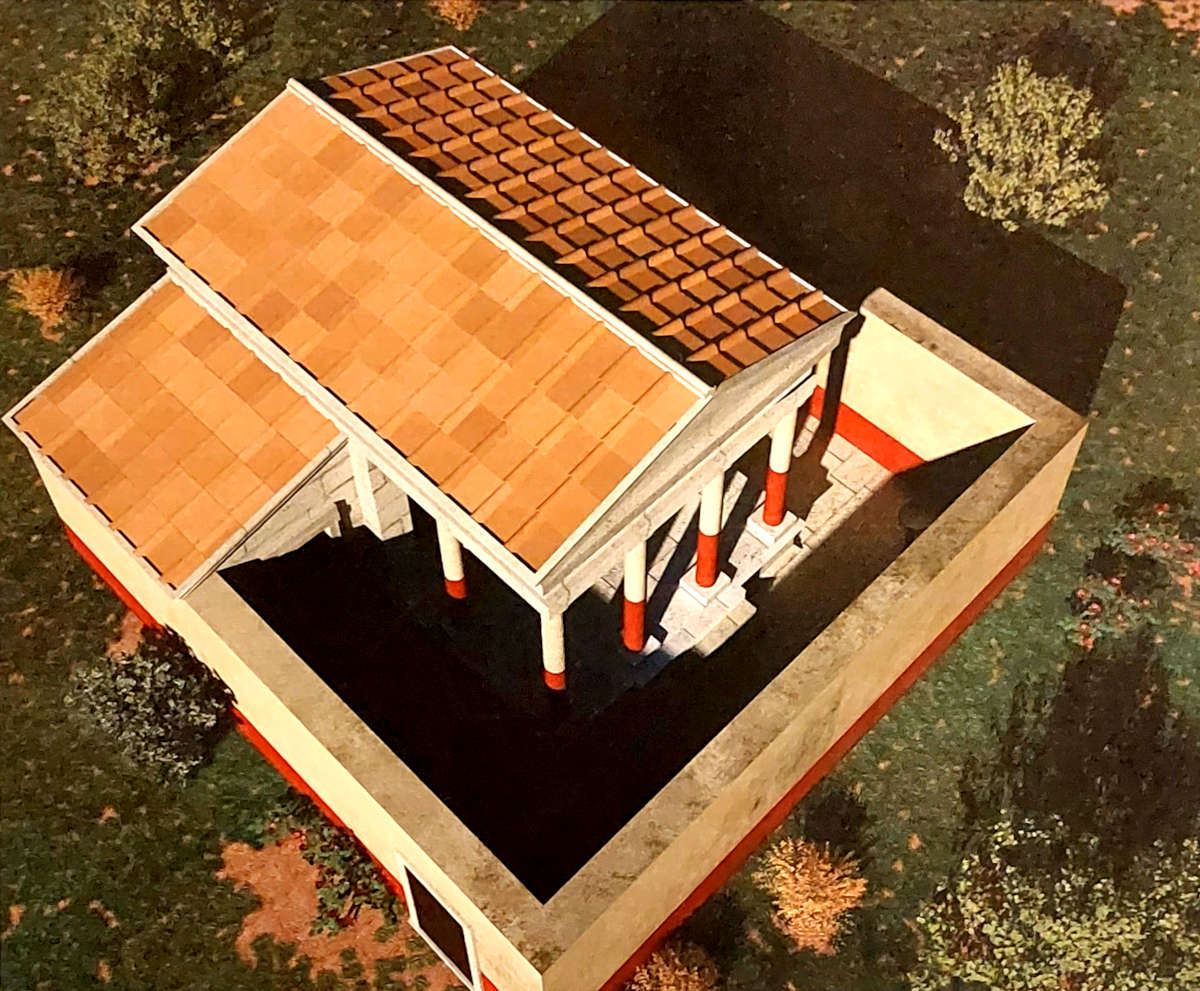
Known as the "villa della liberta Peticia," the villa at Staranzano was one of the residences with a residential and productive character in the territory that in ancient times was administered by Aquileia.It was located along the Roman road that led from Aquileia to Tergeste (Trieste) and in the vicinity of a waterway, perhaps a branch of the Isonzo River that has disappeared today.
Like the other "ville rustiches" of the Roman period, the villa gravitated to a landed estate (fundus) where various economic activities were carried out, from which the owner and his family drew sustenance and products to market. These complexes consisted of a residential part (pars urbana) and a purely productive part (pars rustica).
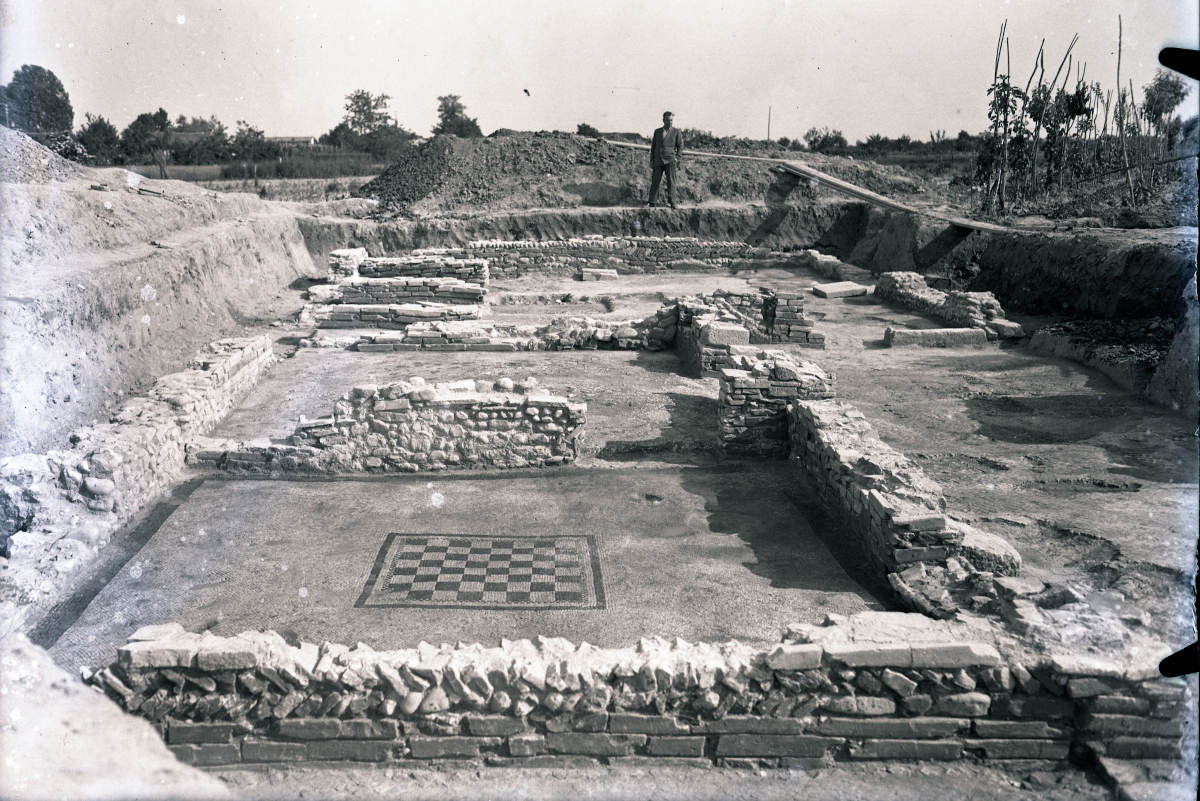
The Staranzano villa was discovered by chance in 1955 on land owned by the parish church during work to modernize the sewage system. Archaeological excavations, conducted by Valnea Scrinari on behalf of the Venetian Superintendence of Antiquities, brought to light only the southeastern corner of the building, at a depth of about 80 cm from ground level and covering an area of about 130 sq. m.
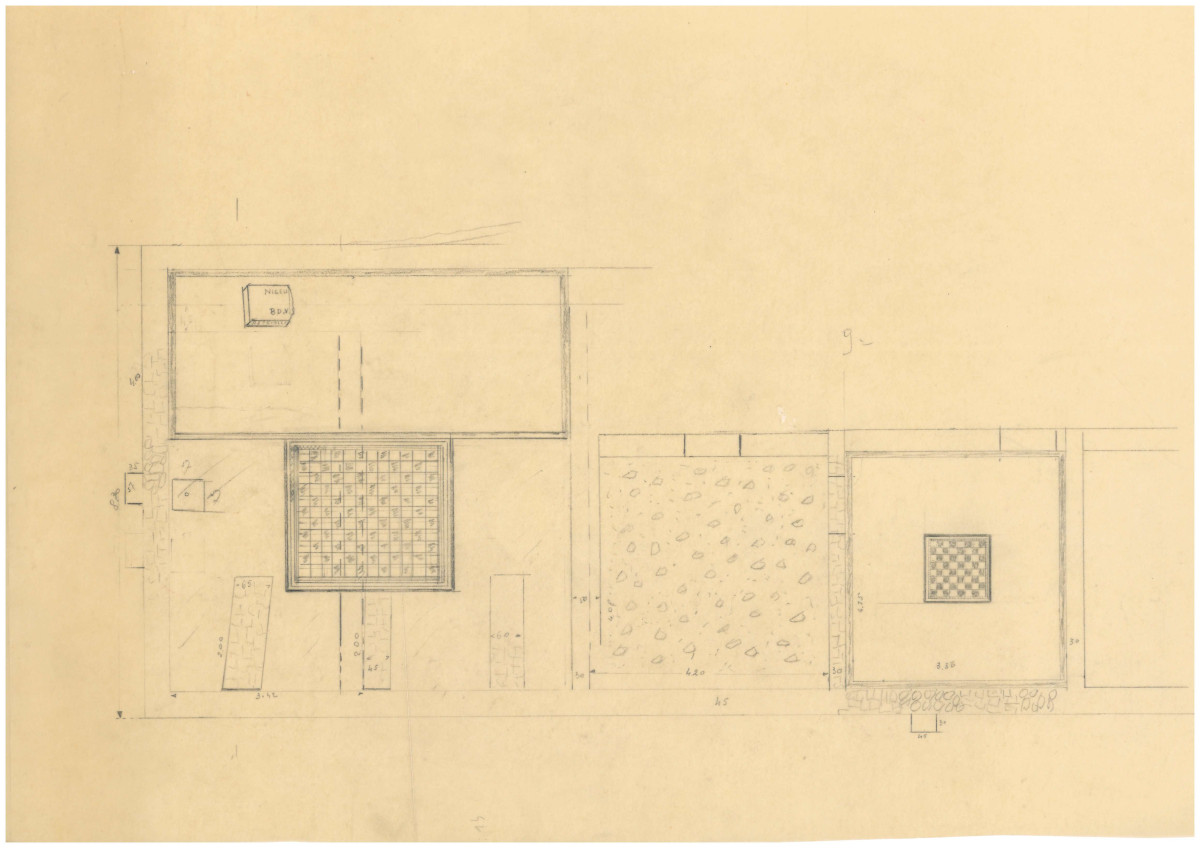
From these early investigations remain the notes and sketches that Giovanni Battista Brusin, archaeologist and director of the Archaeological Museum of Aquileia from 1922 to 1952, recorded in his diaries. Other limited surveys and restoration and conservation work on the structures were carried out in 2002 and 2008 by the Soprintendenza per i Beni Archeologici del Friuli Venezia Giulia.
The size of the villa is currently unknown. Recent geoarchaeological investigations carried out in 2022 as part of the "E-VILLAE" project promoted by the Municipality of Staranzano have made it possible to identify, to the southeast of the already excavated complex, traces of at least two rooms probably pertaining to the villa but not physically connected to the residential part.
The first building of the complex is dated to the second half of the 1st century BC. Based on archaeological data, we know that between the 1st and 2nd centuries AD changes were made to the building during at least two phases of renovation.
The villa was inhabited until the beginning of the third century AD. Renovations involved not only changes in the size of the rooms, but also the use of different building materials in the masonry: the earliest phase saw the use of river pebbles, while in more recent ones brick fragments and tiles were also used. The latter were often stamped with trademarks referring to well-known local manufacturers.
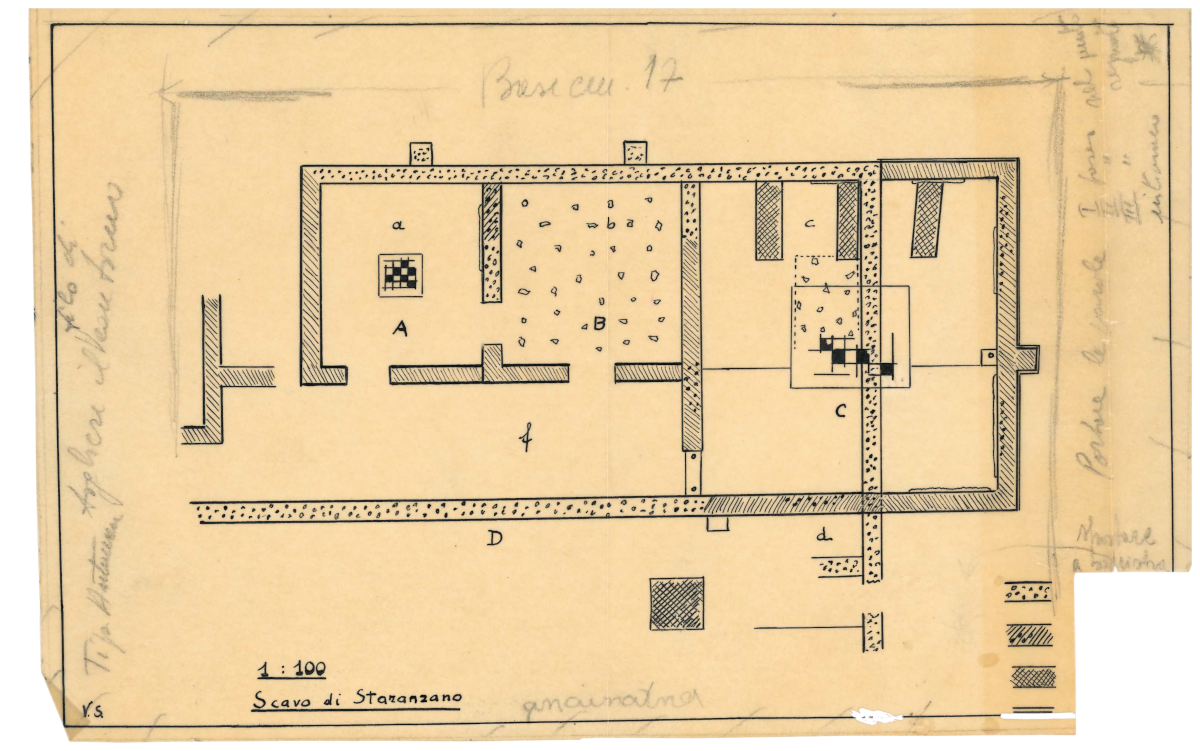
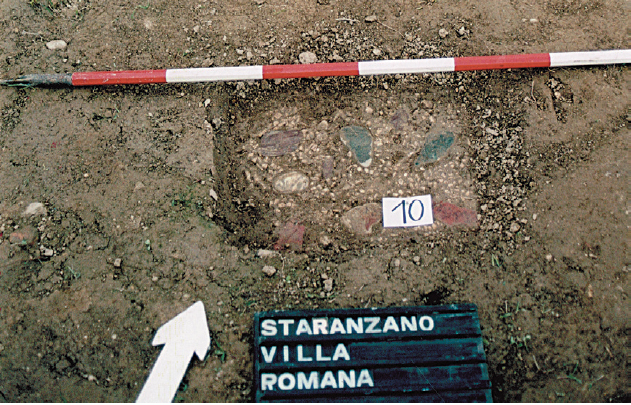
The 1955 excavation brought to light three identical rooms, paved in opus caementicium (beaten mortar incorporating flakes of stones of different colors), placed side by side and facing a long and narrow room, perhaps a courtyard, referable to the first building phase.
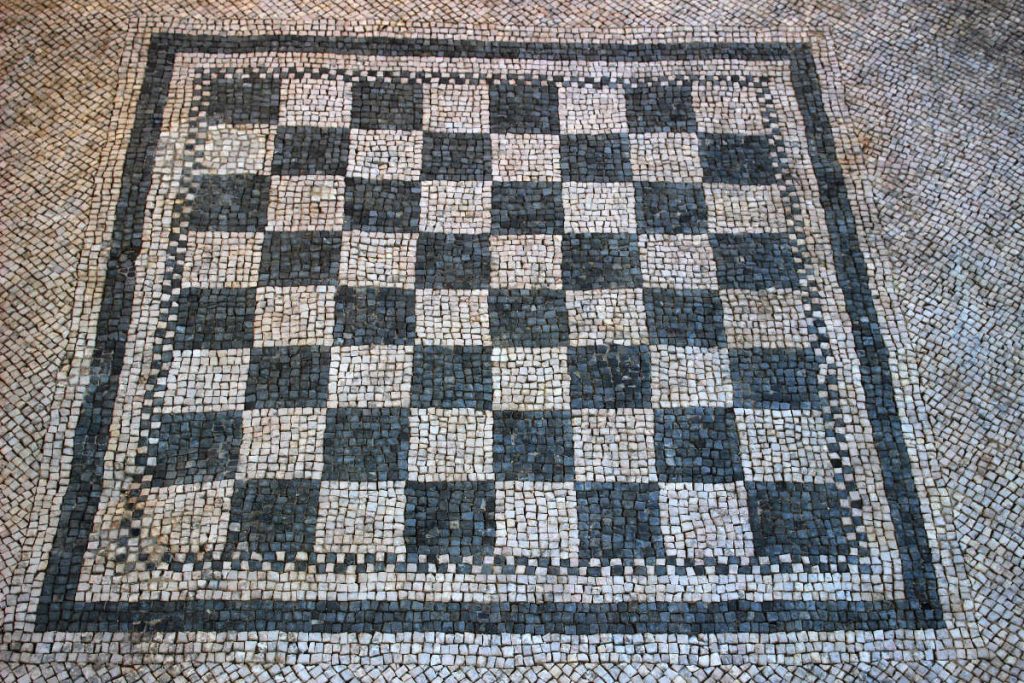
During the first renovation, the room to the southeast (A) was considerably enlarged: one part was paved in terracotta cubes and the other in black and white tessellation; a black and white checkerboard mosaic (emblem) was inserted in the center of the room. This room was possibly used as a triclinium (dining room), with the triclinar beds probably arranged on the terracotta-paved area.
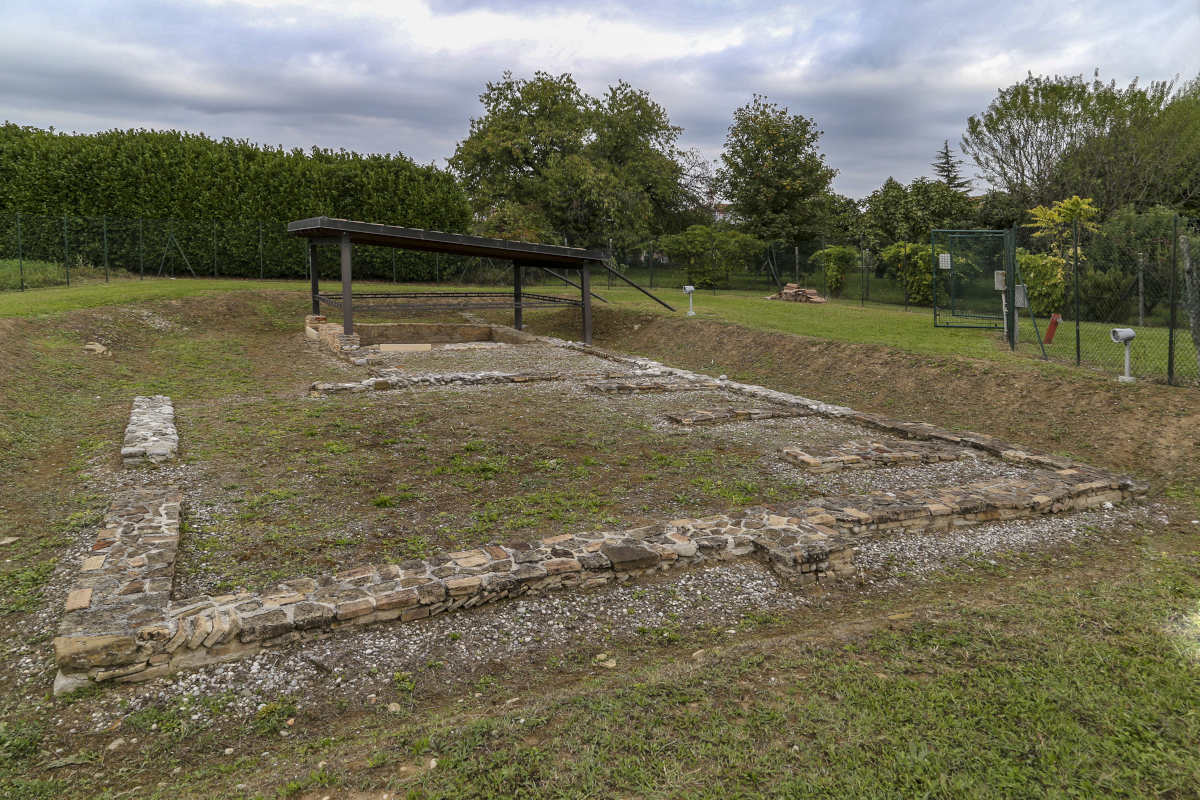
The northernmost room (C), now covered by a canopy, was also repaved with a white-tile mosaic framed by a black-tile band.
A black-and-white checkerboard pattern was inserted in the center of the floor, also bordered by a black frame.
The last renovation,characterized by a sloppy construction technique,made significant changes to the great hall (A).
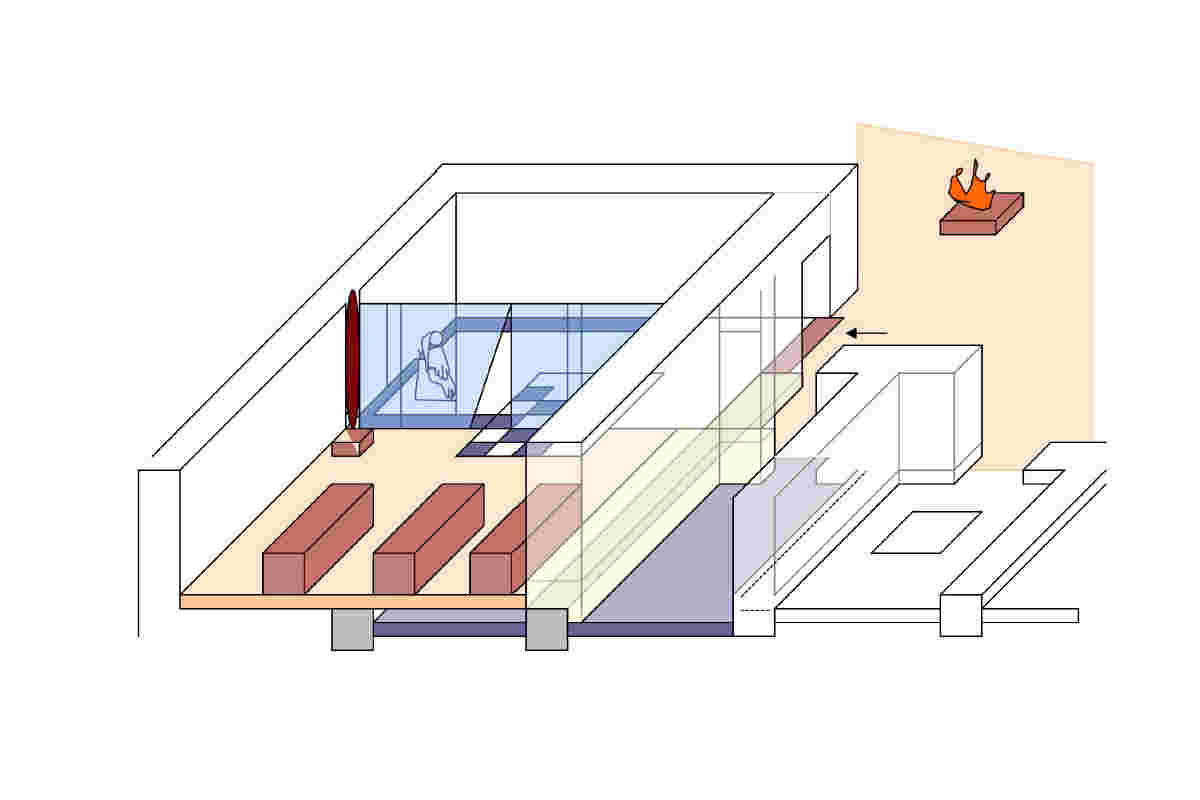
Part of it was subdivided into four small rooms or cells by walls.
The discovery of a squared stone block with a central hole (D),juxtaposed to the perimeter wall of the housein correspondence with an external buttress, leads to the hypothesis that a post was inserted there to support a movable partition (e.g., a curtain): this would have allowed the room to be further divided, creating a sort of antechamber and preventing the view of the cells. Such elements suggest the transformation of this part of the villa into a sacellum, that is, a place intended for a domestic cult.
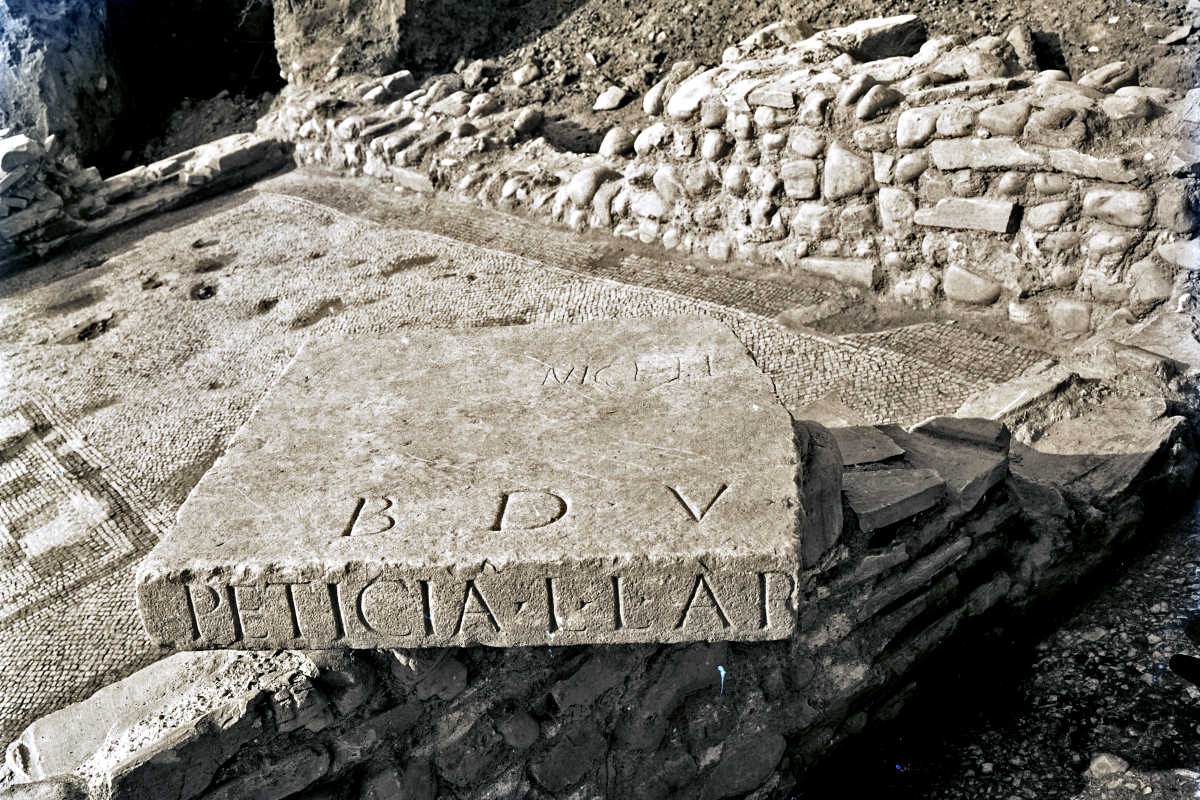
The room was entered from the courtyard through a door documented by the finding of a stone threshold (E) with hinge holes. This transformation into a sacellum is corroborated by the finding, in this room, of a large stone slab (dimensions preserved 57 x 57 cm), possibly a mensa, a kind of table for ritual offerings.
It bears engraved the inscription B(onae) D(eae) V(otum) / PETICIA L(uci) L(iberta) AR[-] testifying to the dissolution of a vow made by Peticia, a freedwoman (freed slave) of the Peticii family, to the Bona Dea.
The inscription is dated between the end of the first century B.C. and the first half of the first century A.D. and thus testifies that the cult to the Bona Dea was practiced in the Staranzano villa already during its first phase of establishment.
A large quadrangular platform was also found in the inner courtyard of the complex, paved with terracotta cubes, whose function or possible relationship to the sacellum is unknown.
The cult of Bona Deaera particularly widespread in the territory of Aquileia and was connoted as a mystery cult, practiced only by women, whose characters could not be known to men. Celebrations were held in public form in temples but also in private form inside homes; free women and enfranchised slaves participated.
The presence of the small cells in room A of the villa harkens back to sacred buildings dedicated aquesta deity salutifera, for example the temple of Bona Dea Subsaxana on the Aventine Hill in Rome or the one identified in the center of Trieste in 1910, where the cells were perhaps intended for the performance of divination activities or healing rites.
Understanding the architectural features of the Staranzano villa and reconstructing its phases of occupation are particularly problematic because of the paucity of everyday materials recovered during archaeological investigations, such as pottery and amphorae. Only stamped tiles and a few metal objects, such as a bronze net needle, are mentioned in the 1955 excavation diaries.